
TRANSCRIPT
Free Audio to Text Converter
Supported: YouTube, TikTok, Instagram, LinkedIn, Twitter — video, short, reel, or playlist.
Upload or drag a video or audio here
One audio or video file at a time. Common formats are supported.
What Is an Audio to Text Converter?
An audio to text converter turns spoken audio — MP3, M4A, WAV, FLAC, and other common formats — into written, timestamped text you can read, search, copy, and reuse. It is different from an audio transcript that already exists: a converter creates the text from the recording itself, while a transcript is the finished document. It is also different from subtitles, which are a timed track built for a player rather than readable prose. The hardest cases are the ones people actually have: long recordings, accented speech, crosstalk, and background noise, often with no existing transcript to fall back on. That is where a real audio to text converter earns its place, because the output has to be usable, not just roughly correct. Whether you search for an audio to text converter, an audio transcript, or a way to convert audio to text, the result should be clean, timestamped text you can act on.
How the Audio to Text Converter Works
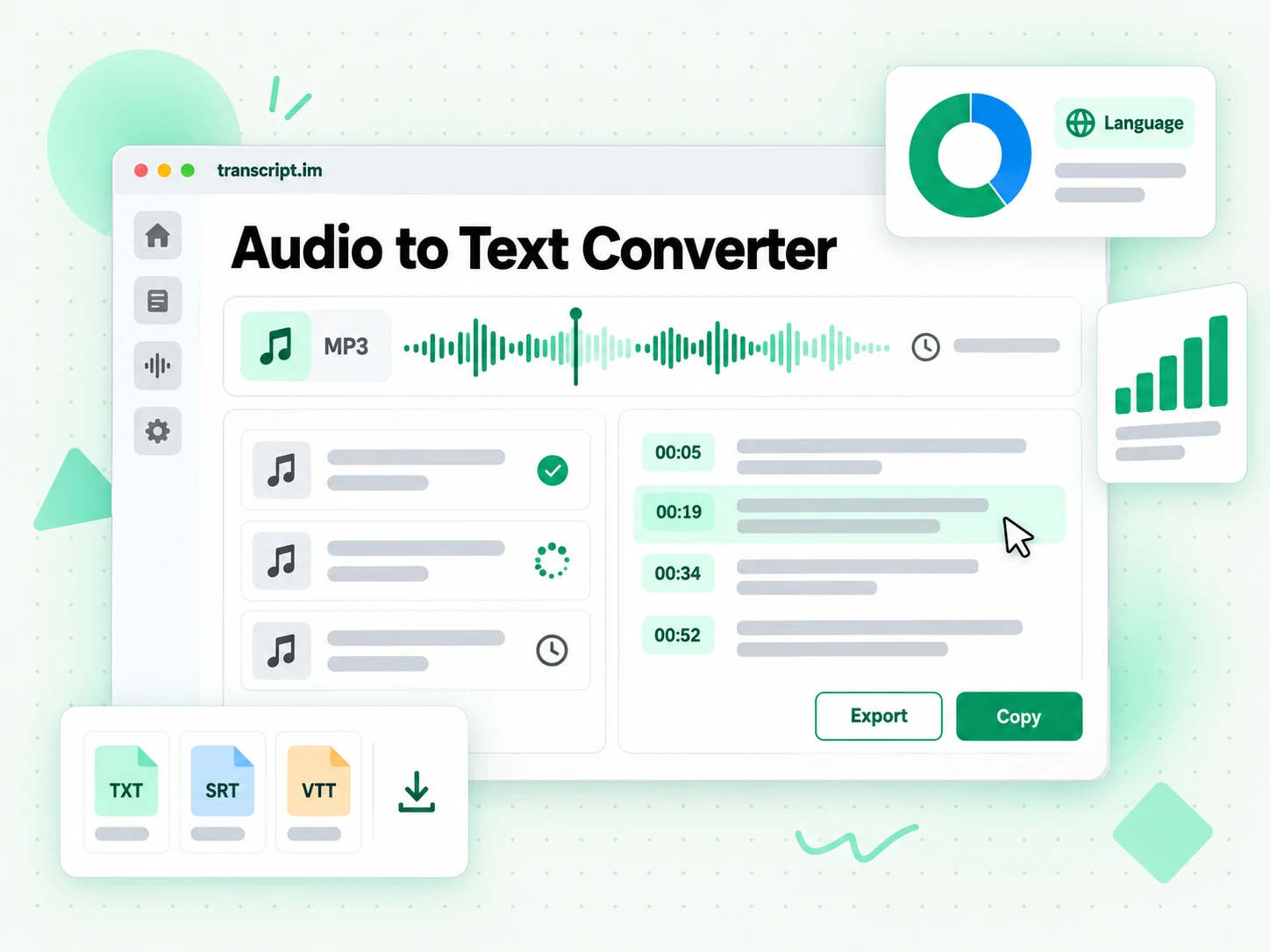
One uploaded file or pasted link takes you from spoken audio to a searchable, exportable transcript in three stages.
Turn an Audio File Into a Transcript
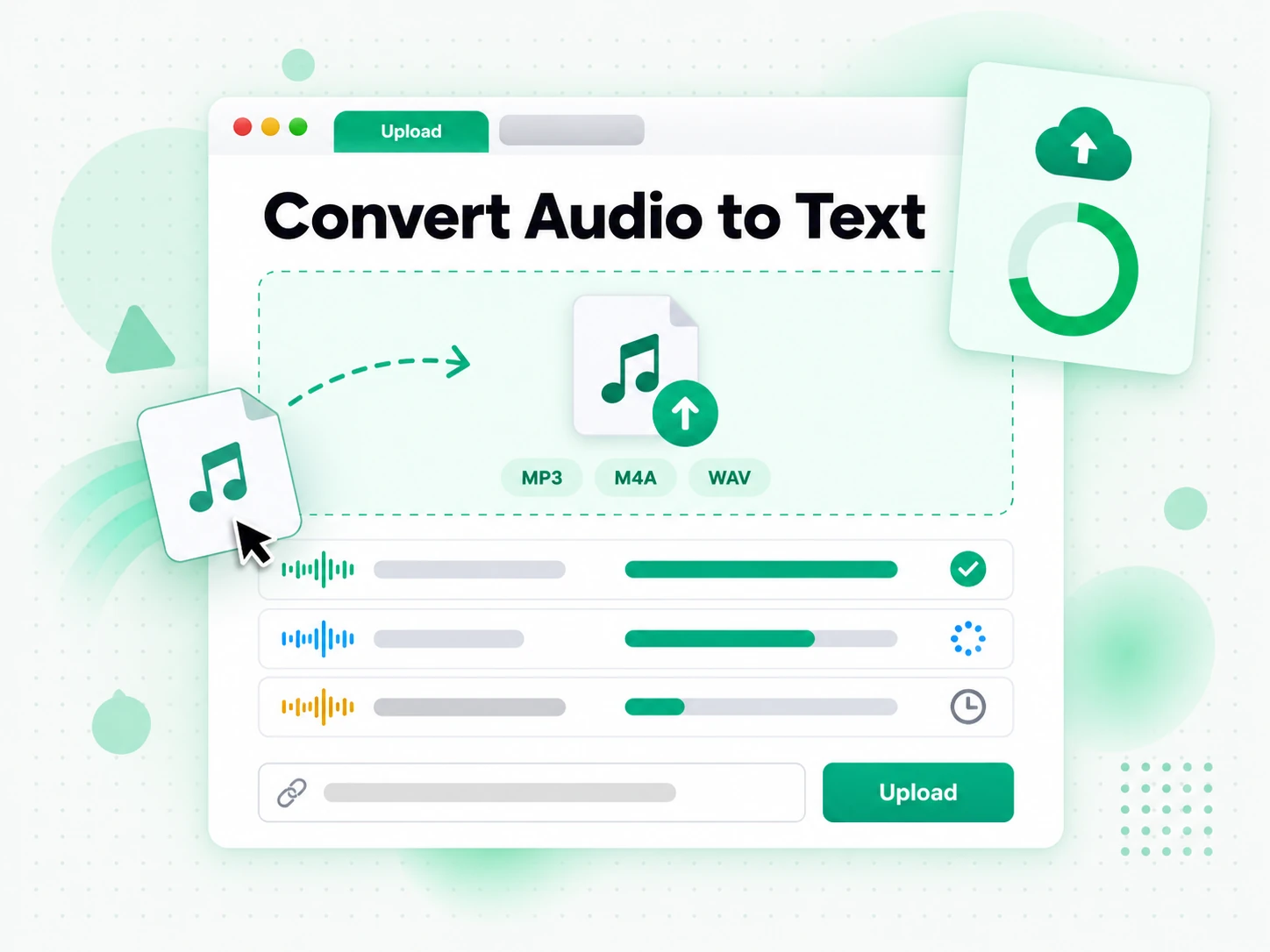
Upload an MP3, M4A, WAV, or FLAC file of up to 5 GB, or paste a link to a podcast episode, and the converter extracts the audio track and transcribes it with AI. The spoken language is detected automatically, so you do not choose a setting before you start, and the result comes back as timestamped lines that stay aligned to what was actually said. There is no software to install and no separate transcript file to hunt down: the audio itself is the only input the converter needs. A recording that would take hours to type out by hand comes back as text you can read, search, and reuse.
- Accepts MP3, M4A, WAV, FLAC, and other common formats
- Files up to 5 GB, or a pasted podcast link
- Automatic language detection, no manual setup
Read and Search the Transcript Without Replaying
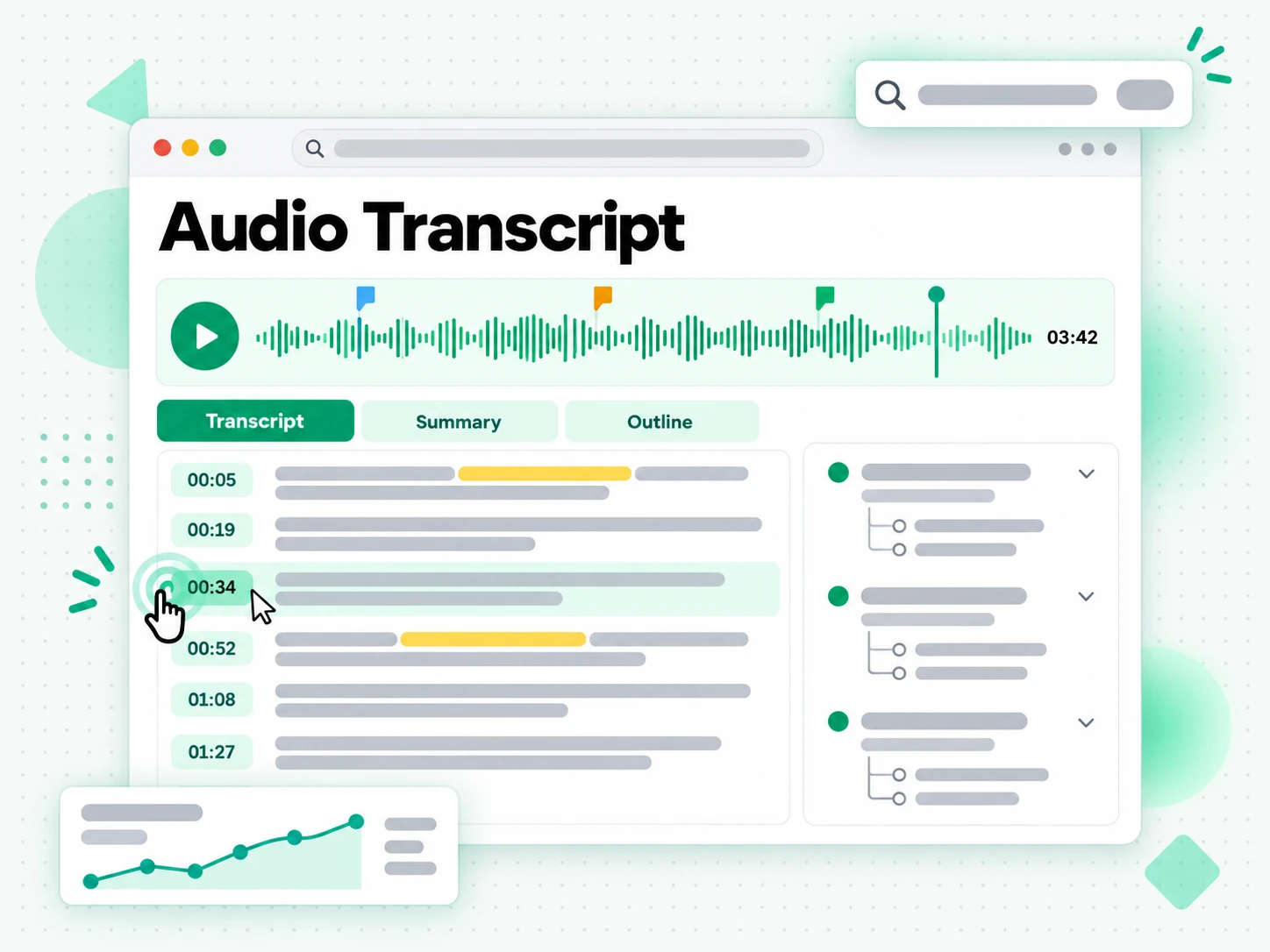
Once the audio transcript is ready you can search it for a phrase, jump to a moment by timestamp, or run a summary, an outline, or a mind map to see how a long recording is structured. Instead of scrubbing through the audio and hoping you remember the wording, you read the transcript as text and find the exact line you need. Copying a line takes one click, the full text stays searchable in the browser, and a long file stops being something you have to replay to reference. A two-hour interview becomes a page you can scan, quote, and check in a fraction of the time it takes to listen to it again.
- Search and copy the full transcript in the browser
- Jump to any moment by its timestamp
- Summary, outline, and mind map views from one transcript
Export, Translate, or Reuse the Text
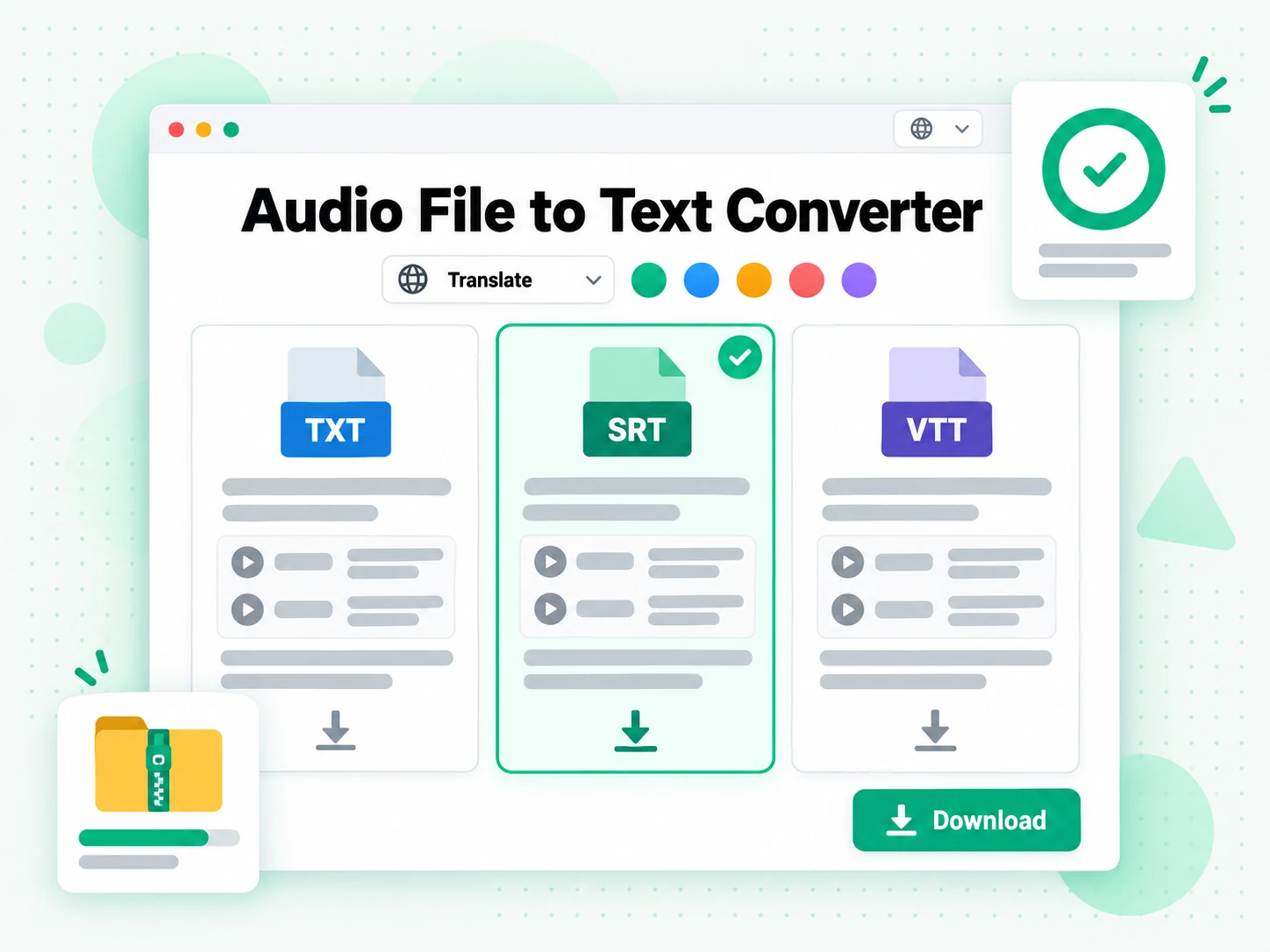
Download the audio transcript as TXT, SRT, or VTT, translate it into another supported language with the timestamps preserved, or hand it to an AI tool as a brief for a new draft. A transcript you can export is a transcript you can reuse: paste it into your notes, turn a talk into a blog post, build show notes from an episode, or use the SRT as captions for your own edit. Because the output keeps its timestamps, the same audio to text result can become a subtitle file, a summary, a mind map, or a first draft, without another pass through the audio.
- Download as TXT, SRT, or VTT
- Translate into another supported language
- Rewrite into an article, newsletter, or script
Why transcript.im Beats Manual Transcription
✅ transcript.im
Upload any audio file or paste a link and get the full, timestamped transcript, however long or noisy the recording is. The text stays searchable, copyable, exportable as TXT, SRT, or VTT, and translatable, and you can summarise it in the same place you read it.
❌ Manual transcription
Typing out audio by hand takes hours for a single interview, and the longer the recording the more of it you have to replay to get the wording right. There is no search across the result, no timestamps you can trust, and no easy way to export or translate what you wrote.
Who an Audio to Text Converter Is For
An audio to text converter helps anyone who would rather read, quote, or reuse spoken words than listen to a recording again.
Recreate content in a new form or language
One recording can feed several channels. Convert the audio to text and the transcript becomes the raw material for whatever format comes next.
- Draft show notes and a long-form article from one episode's transcript.
- Pull social quotes without listening back to find the strongest lines.
- Translate the transcript into a supported language with timestamps intact.
- Give the episode a searchable page that lives on after the release.
- Jump to the exact moment a claim was made using its timestamp.
- Reshape one recording into a newsletter, an article, and social posts.
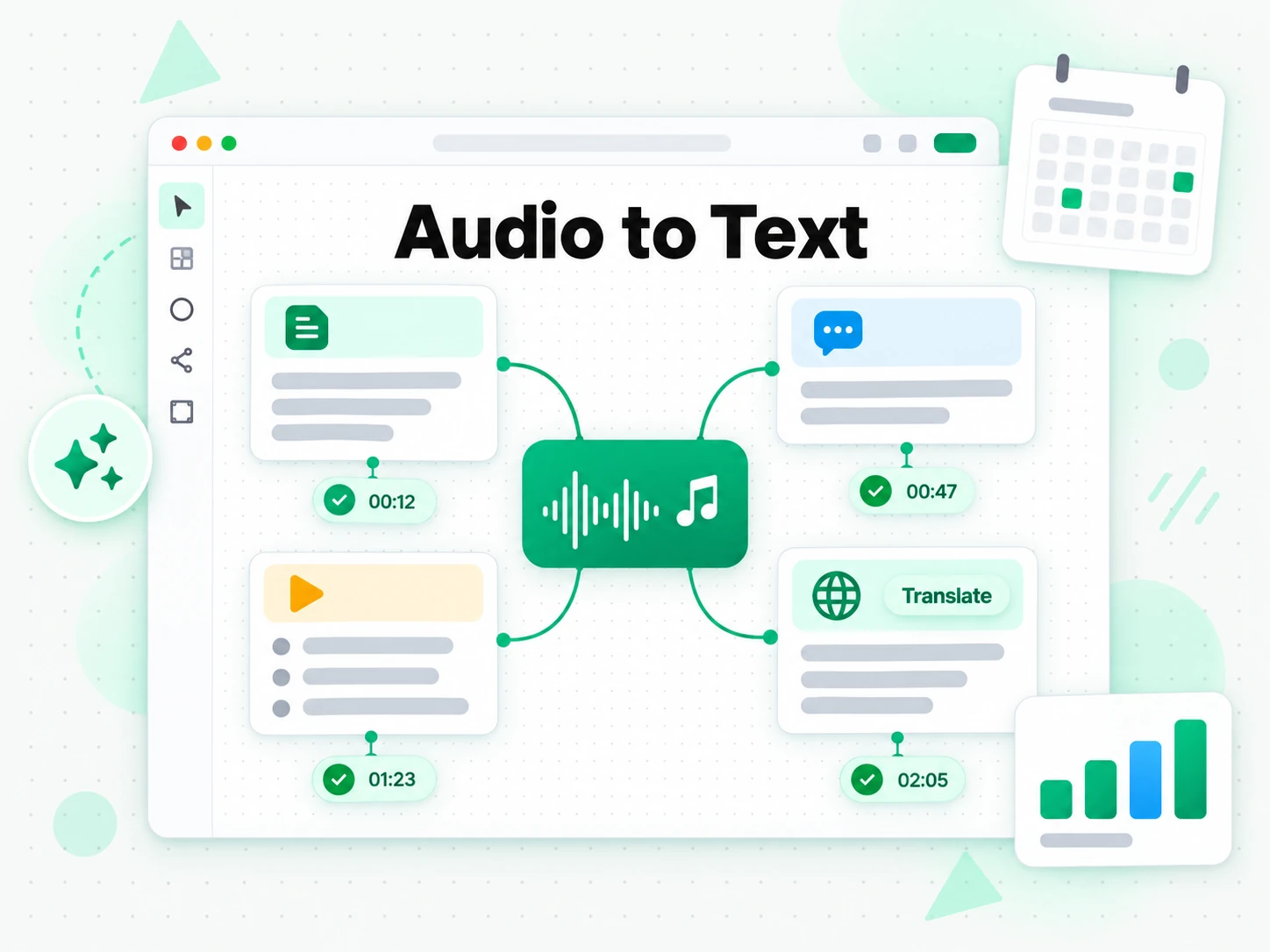
Capture study and meeting notes
Lecture recordings, interviews, and meeting audio are easier to study as text than hours of playback. Convert the file and search it for the definition, name, or figure you half-remember.
- Search an hour of recording for a name, a figure, or a definition.
- Jump to the timestamp where it was said instead of replaying the file.
- Turn the transcript into an outline or a mind map to see the argument.
- Quote a source precisely from the exact wording, not from memory.
- Summarise the session into a study document you can skim later.
- Check the source later against the timestamp you kept in your notes.
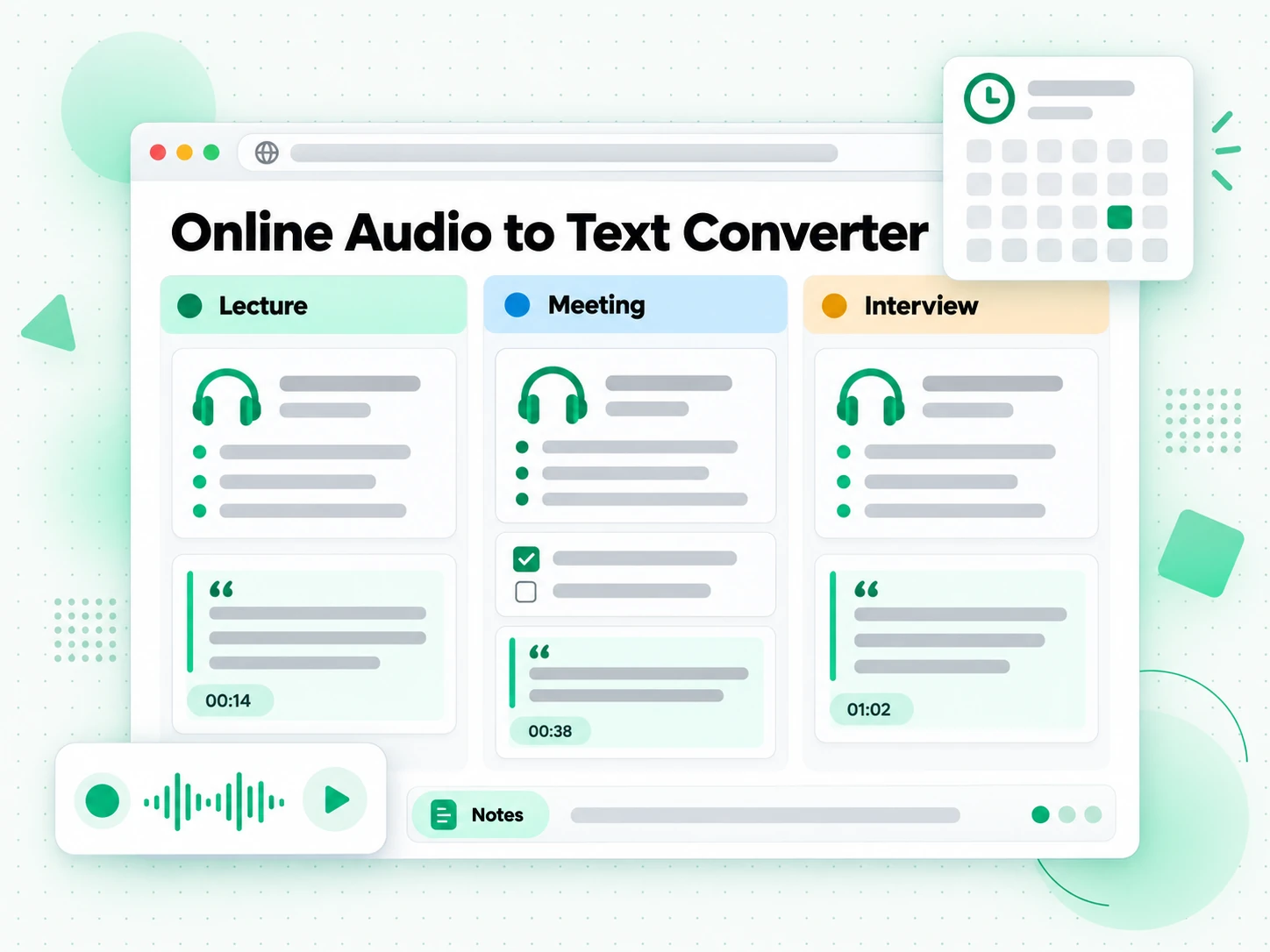
Produce localized sales and outreach scripts
One recording can become outreach scripts, ad copy, and a localized version for every market you sell into. The transcript is the single source the whole team works from.
- Adapt a call recording into outreach scripts and ad copy for the next campaign.
- Localize the message into a supported language without re-recording it.
- Build a phrase library from webinars and customer interviews that already worked.
- Export as TXT for a written brief your team can edit.
- Export as SRT when the script becomes a captioned video.
- Work from one source so nothing is retyped between recording and campaign.
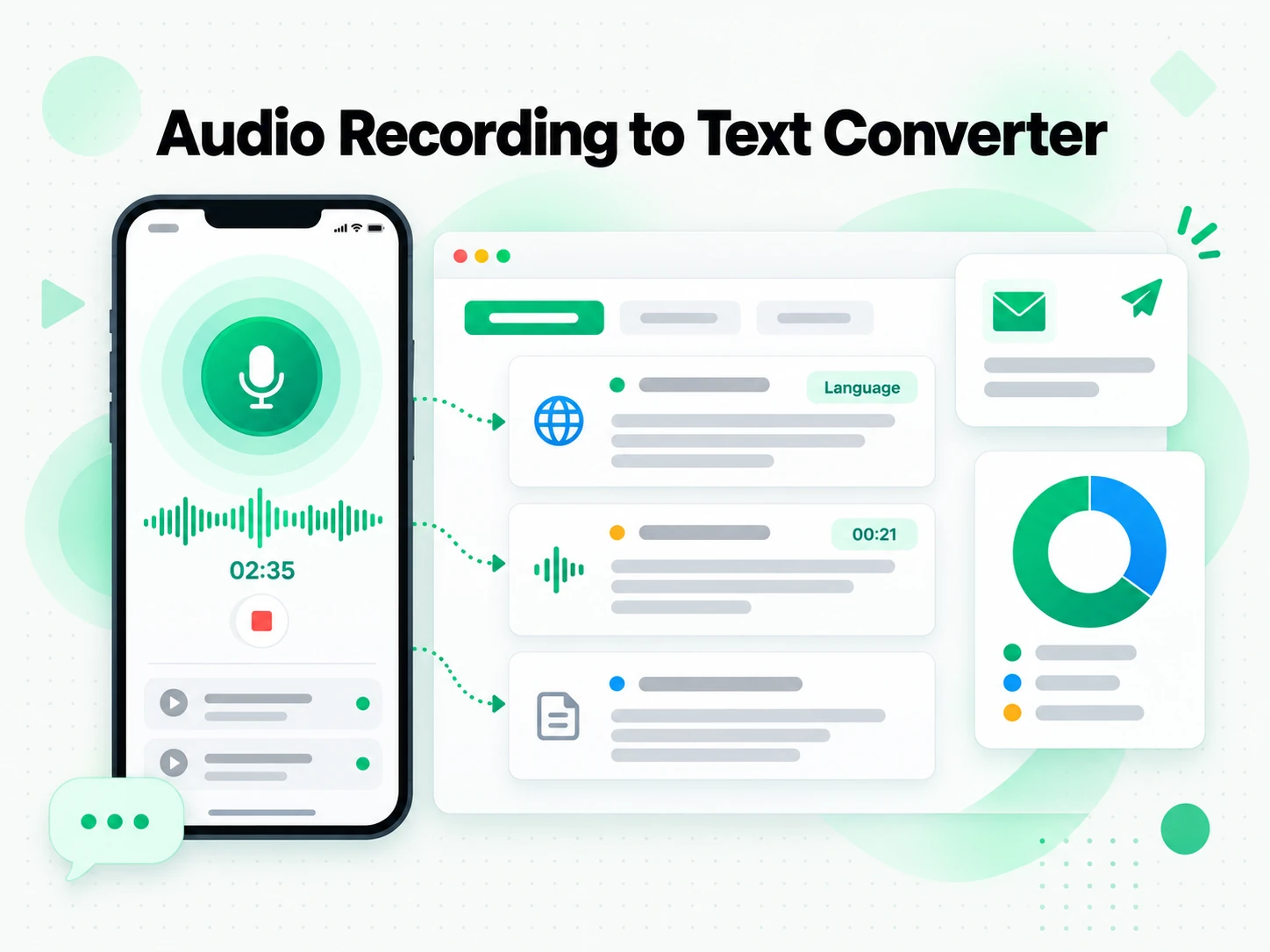
For Podcasters and Show Producers
An episode holds the raw material for everything that follows: show notes, a newsletter, a clip description. Convert the audio to text and the transcript becomes the source the whole release is built from.
- Draft show notes from the written episode instead of replaying it.
- Pull the strongest quote and point listeners to its timestamp.
- Publish a searchable page for each episode so it lives on after release.
- Translate the transcript to reach a second audience.
- Brief a co-host or editor from the text of the last episode.
For Journalists and Interviewers
Interviews arrive as audio, but the story is written from the words on the page. An audio to text transcript gives you a searchable record where every quote can be checked against the moment it was said.
- Search an interview for a name, a phrase, or a figure without replaying the file.
- Copy a quote with its timestamp so it can be verified later.
- Compare what two sources said by reading the transcripts side by side.
- Keep a dated record of the conversation for fact-checking.
- Export the text to share the sourcing with an editor.
How to Convert Audio to Text
- 1
Upload the Audio File
Drag an MP3, M4A, WAV, or FLAC file into the box at the top of the page, or paste a link to a podcast episode. There is no software to install and no setup to work through: the file or the link is all the input the audio to text converter needs, whether you are on a phone, a laptop, or a shared computer.
Upload or drag a video or audio here
One audio or video file at a time. Common formats are supported.
- 2
Generate the Transcript
Start the conversion and the audio is transcribed with AI, with the spoken language detected automatically. The result is a full audio transcript with timestamps that stay aligned to what was said, so a long interview or a noisy lecture comes back as readable text rather than a rough sketch.
- 3
Read, Search, and Copy
Search the transcript for a phrase, jump to a timestamp, and copy a single line or the whole passage. Instead of replaying the audio to find a quote, you read the transcript as text and reuse the exact wording you need, then keep the timestamp to check it later.
- 4
Export, Translate, or Reuse
Download the audio transcript as TXT, SRT, or VTT, translate it into another supported language with the timestamps preserved, or hand it to an AI tool as a brief. The same transcript can become show notes, captions, a summary, or a first draft.
Use Your Audio Transcript in the Apps You Already Have
Google NotebookLM
Paste the transcript into a notebook as a text source to summarise the recording and ask questions about it. NotebookLM works from text, so a clean audio transcript is exactly what it needs.
ChatGPT, Claude, Gemini, Kimi, and Manus
Paste the transcript into the assistant you already use — ChatGPT, Claude, Gemini, Kimi, or Manus — and treat it as a brief: draft a summary, rewrite it for a different audience, or pull out the arguments in order.
Video Editors and Subtitle Tools
Export SRT or VTT and drop it straight into your editor to caption your own cut, or start a translation from the same timestamped file with no re-timing needed.
Builders Using the API and MCP
transcript.im also exposes an API and an MCP server, so a script or an agent can convert audio to text and pass the transcript into the rest of your pipeline.
transcript.im vs Other Audio to Text Tools
Different tools answer different questions. Use this table to pick the one that matches what you actually need from an audio transcript.
| Tool | What it does | Use it when |
|---|---|---|
| transcript.im | Full timestamped transcript for any audio file, with search, export, translation, and AI views. | When you need a clean transcript you can reuse, not just read. |
| Manual transcription services | A human types the audio out by hand and returns a text file, usually billed per minute. | When accuracy on a hard recording is worth the wait and the cost. |
| Speech-to-text dictation apps | Capture live speech into text as you talk, rather than converting a finished file. | When the words are being spoken now, not recorded already. |
| Online audio converters | Upload a file and get plain text, often without timestamps, translation, or an AI fallback. | When a short clip only needs a rough text version. |
| Google NotebookLM | Summarises a source and answers questions about it inside a notebook. | When the goal is Q&A over the recording, not the transcript text itself. |
Related tools
Audio to Text FAQs
What is an audio to text converter?
An audio to text converter turns a recording into written, timestamped text. It creates the transcript from the audio itself, so you do not need an existing transcript or a caption file to start.
How do I convert audio to text from an audio file or a link?
Upload an MP3, M4A, WAV, or FLAC file, or paste a link to a podcast episode. The converter transcribes the audio with AI, detects the spoken language automatically, and returns a timestamped transcript you can read, search, or download.
Can the audio to text converter work on audio that has no existing transcript?
Yes. The converter builds the transcript from the recording itself, so any file with clear spoken audio is enough. There is no need for a pre-made transcript or caption track before you begin.
Which audio formats can I upload to the audio to text converter?
MP3, M4A, WAV, FLAC, OGG, and other common audio formats are accepted, with files up to 5 GB per upload. That covers long interviews, full lectures, and multi-hour podcast episodes in a single pass.
Does the audio to text converter keep timestamps in the transcript?
Yes. Every line comes back with a timestamp that stays aligned to what was said, so you can jump to a moment, quote it accurately, or export the transcript as a subtitle file later.
Can I convert audio to text in a different language?
The spoken language is detected automatically from the audio, and the finished transcript can be translated into another supported language with the timestamps preserved. You do not have to pick the source language before the conversion starts.
What can I download an audio transcript as?
Download the result as TXT for plain text, SRT for a subtitle file, or VTT for a web caption file. TXT is best for notes and documents, while SRT and VTT are ready for a video editor or a player.
How accurate is an audio to text transcript on long or noisy recordings?
Accuracy depends on the recording. Clear speech transcribes reliably, while heavy background noise, overlapping voices, and strong accents can introduce errors. A high-quality audio track gives the best audio transcript, and you can always convert the file again from a cleaner source.
Can I use an audio transcript with Google NotebookLM and other AI tools?
Yes. Copy or export the transcript and add it to NotebookLM as a text source, or paste it into ChatGPT, Claude, Gemini, Kimi, or Manus as a brief. The plain text drops in without cleanup, so a summary or rewrite starts from the full recording.
What can an audio to text converter not do well?
Music, heavy crosstalk, and recordings where several people speak at once are harder to separate into clean lines, and a very poor audio track limits any converter. For everyday speech in an interview, lecture, or podcast, the result is a transcript you can work with.
How is transcript.im different from a manual transcription service?
A manual service types the recording out by hand and usually bills by the minute, so a long file can take days. transcript.im converts the audio to text on its own and returns a timestamped transcript you can search, export, and translate in the same place.
Is an audio to text converter better than a speech-to-text dictation app?
They solve different problems. A dictation app captures words as you speak them live, while an audio to text converter works on a file that already exists, adding timestamps, search, translation, and export formats that a live dictation tool rarely keeps.
Audio to Text Converter
Drop in any audio file and get a timestamped transcript you can copy, translate, or summarize.